WordPress Trends 2026: Headless, AI, and the Future of CMS
Explore the top WordPress trends for 2026, including headless architectures, AI-powered features, and edge computing. Learn what's next for the world's most popular CMS.
If you think WordPress is just for bloggers and small business websites anymore, you’re in for a pleasant surprise. In 2026, WordPress has evolved into a legitimate enterprise platform—and honestly, it’s pretty exciting. Let’s dive into what’s happening.
Headless WordPress: The Big Shift
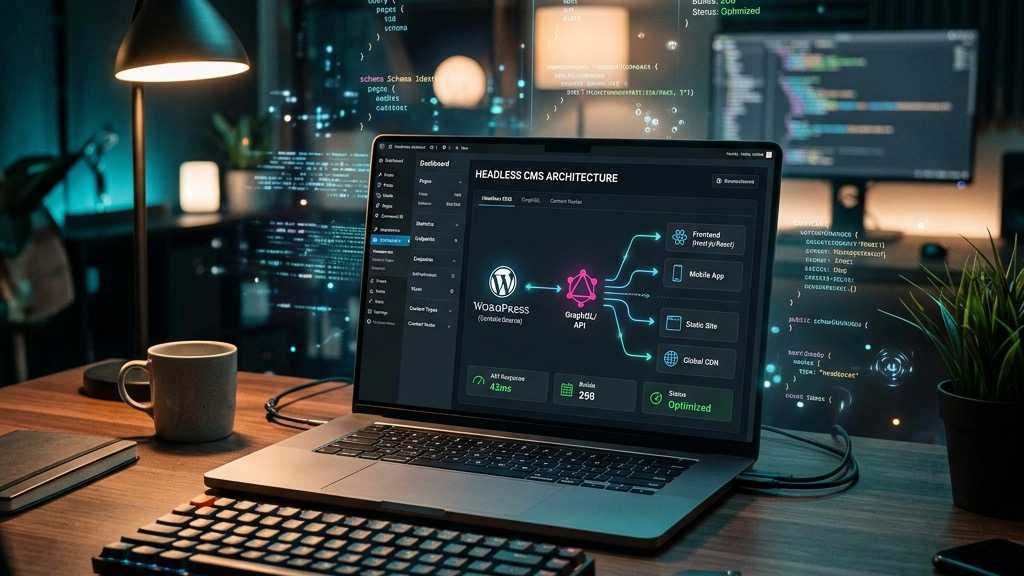
Headless WordPress architecture has moved from “interesting experiment” to “recommended approach” for many projects. Here’s the deal: instead of WordPress handling both your content management AND your front-end display, you split them up.
Your content lives in WordPress as a headless CMS, while your front-end pulls that content via API to render anywhere—your main website, mobile apps, smartwatches, you name it. The flexibility is enormous.
We’re seeing more clients choose headless setups when they need to deliver content across multiple platforms or want complete control over their front-end performance. It’s not for every project, but when it makes sense, it really makes sense.
Edge Computing and Serverless Hosting
Remember when hosting meant finding a server, SSHing in, and configuring everything manually? Those days feel ancient now. Edge computing has exploded in popularity, and WordPress is riding that wave.
Platforms like Cloudflare Workers, Netlify Edge, and Vercel are making WordPress deployments incredibly fast. Your site runs closer to your users—literally. A visitor in Tokyo gets served from an edge location near them, not a server in Virginia.
Serverless hosting means you stop worrying about server management entirely. No more midnight calls because your server crashed. No more manual backups. Just… working websites.
AI-Powered Everything
AI has crept into WordPress in ways that would have seemed like science fiction a few years ago. SEO plugins now analyze your content and suggest improvements in real-time. Some can even generate draft content based on your keywords and target audience.
But it’s not just about content creation. AI-powered analytics help you understand your visitors better. Chatbots handle support conversations. Personalized content recommendations adapt to each visitor’s behavior.
For a deeper dive into why AI matters for websites, see our post on Why Your Website Needs AI in 2026.
The key insight: AI in WordPress isn’t about replacing human creativity—it’s about amplifying it. You’re still the creative director; AI is your incredibly efficient assistant.
Gutenberg Evolved
The Gutenberg editor has come a long way since its controversial launch. In 2026, it’s genuinely powerful. We’re seeing nested blocks, conditional display rules (show this section only to logged-in users, or only on mobile), and Full Site Editing (FSE) capabilities that let you design entire themes without touching code.
If you haven’t given Gutenberg a serious try recently, you might be pleasantly surprised. The block system has matured into something genuinely powerful for content creators.
Design Trends: Organic and Bold
Design-wise, we’re seeing a reaction against the minimalist, grid-based aesthetics that dominated the last decade. Organic shapes, anti-grid layouts, and bold colors are making websites feel more human and less corporate.
Typography is getting more adventurous too. Variable fonts and dramatic sizing create visual interest without adding weight to your pages. The trend is toward websites that feel designed rather than templated.
AI as Creative Partner
Here’s where it gets interesting: AI is becoming a genuine creative partner in the design process. Tools can generate layout suggestions, color palettes, and even complete component designs based on your brand guidelines. It’s not about AI replacing designers—it’s about AI handling the exploration phase so humans can focus on refinement.
The Personalization Revolution
Hyper-personalization is no longer just for big corporations with massive budgets. WordPress tools have democratized delivering unique experiences to each visitor.
Imagine a returning visitor seeing content specifically relevant to their previous browsing. Or a first-time visitor from a specific industry seeing tailored messaging. This used to require enterprise-level investment; now it’s accessible through WordPress plugins and integrations.
AR/VR on the Horizon
We’re starting to see WordPress sites experiment with augmented and virtual reality. Product configurators, virtual showrooms, and immersive storytelling experiences are becoming viable. It’s early days, but the direction is clear: the web is getting more immersive.
What This Means for You
The WordPress of 2026 is faster, smarter, and more flexible than ever. Whether you’re building a simple business site or a complex digital experience, the platform has matured to handle it.
The trends point toward more headless architectures, deeper AI integration, and experiences that feel less like websites and more like intelligent applications.
Want to build something modern with WordPress? We’d love to hear about your project. Get in touch on our contact page, or if you’re curious about our past work, check out our projects.
Related Reading
How to Choose Between WordPress and Headless CMS in 2026
Struggling with the WordPress vs headless CMS decision? We break down the pros, cons, and real costs to help you choose the right approach for your business in 2026.
10 Tips for Optimizing Your WordPress Website
Speed up your WordPress site, improve SEO rankings, and provide a better user experience with these proven optimization techniques.

EZ Page Sync: WordPress Staging-to-Production Sync Plugin
See how EZ Page Sync pushes a single WordPress page from staging to production with HMAC-signed HTTPS, snapshots, rollback, and cache purging.
Need Help With Your Website?
Professional Web Development Services in Houston
Whether you need WordPress development, custom React applications, or eCommerce solutions, we build websites that convert. Free consultation, no pressure.